
Arjuna isn't afraid of the battle. He's lost his will to act entirely. He has skill, training, every reason to act — and he cannot make himself do it. He sits on the floor of his chariot and says: I won't fight.
Krishna doesn't call this cowardice. He calls it hridaya-daurbalyam — weakness of heart. The collapse that happens when a person loses their sense of purpose.
The Gita's three-guna framework is practically useful here. Tamas — heaviness, inertia, resistance to movement — is not permanent. It's a state that can be shifted. Not by waiting (that's just more tamas), but by one small act of movement. Because the Gita teaches something counterintuitive: you don't need motivation to act. The action produces the motivation.
The heaviness you feel is not your nature. It's covering your nature. Every practice — a morning verse, a few minutes of meditation, asking Saarthi AI one honest question — is a way of clearing what's in the way. Start there.
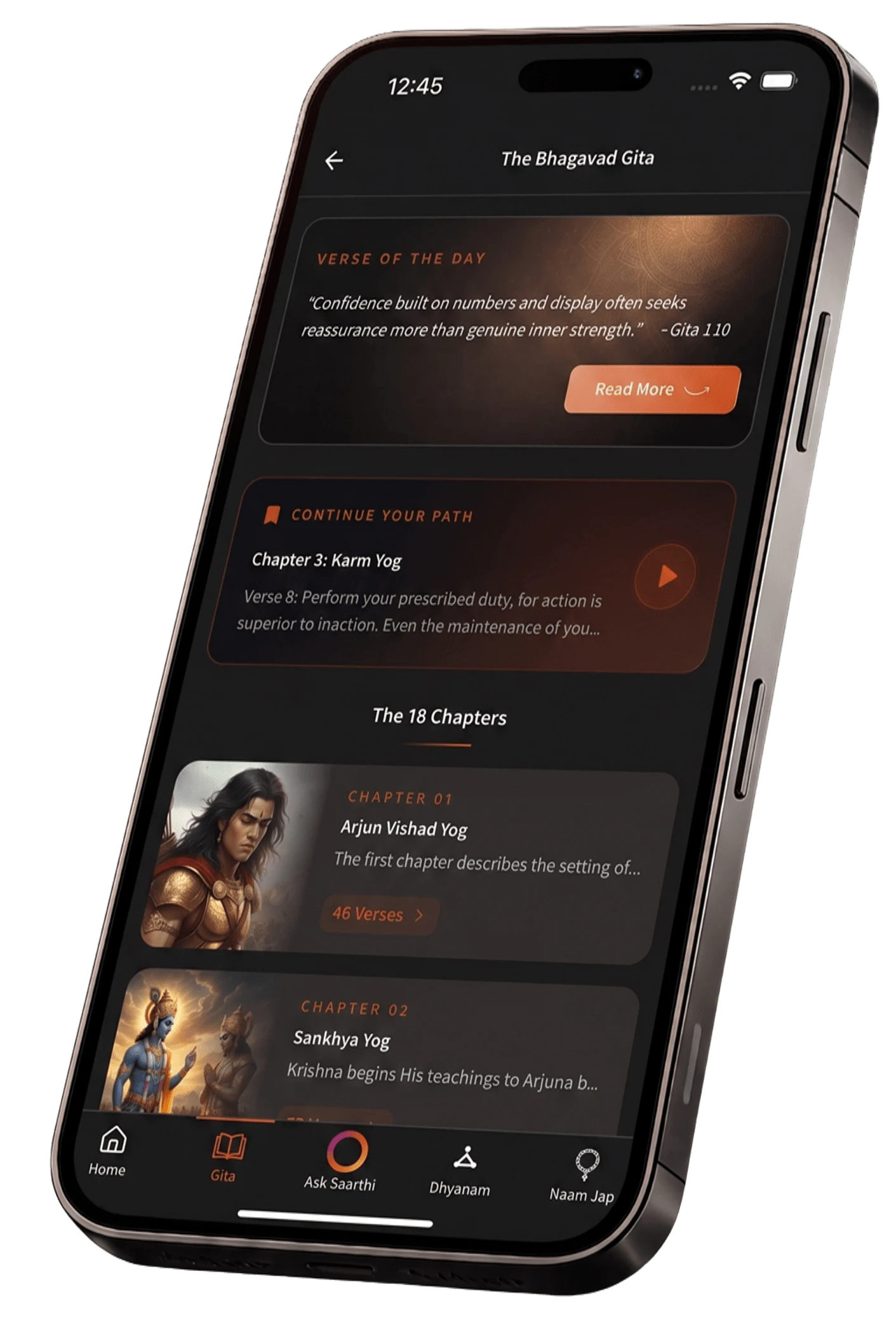
Experience it on Arutra
Download the Arutra App
Guided Bhagavad Gita sessions, Bhagavad Gita verses, Saarthi AI, and more. Free on Android and iOS.