
The Hanuman Chalisa is arguably the most recited religious text in contemporary India. Millions of people chant it daily, in homes, in traffic, in temples, before exams, during illness, and at moments of fear. The sheer breadth of its use across communities and regions suggests that it touches something universal in the devotee's relationship with Hanuman and, through Hanuman, with Ram.
Tulsidas and the Vernacular Tradition
Tulsidas, the great poet-saint of the Bhakti movement, composed the Hanuman Chalisa in Awadhi, the vernacular language of his region in the 16th century, precisely to make the text accessible to people who could not read Sanskrit. The word Chalisa means forty, reflecting the text's forty verses (chaupais), framed by two opening dohas (couplets) and a closing doha. This compact structure means it can be recited in fifteen to twenty minutes while containing an impressive density of devotional content.
The Opening Dohas
The text opens with two dohas that serve as invocations. The first addresses Guru: "I bow to the feet of the Guru, the ocean of wisdom and knowledge, the source of light that purifies all darkness." The second turns to Hanuman directly, praising his form and his qualities, mighty, wise, virtuous, eager to serve Ram.
The Body of the Chalisa
The body of the Chalisa moves through a kind of biography of Hanuman's glories. It celebrates his knowledge of all scriptures. It describes his leap across the ocean to Lanka, demonstrating both his physical power and his willingness to see the enormous as manageable when serving Ram. It narrates his discovery of Sita, his role in defeating the demons, his revival of Lakshmana with the sanjeevani herb.
What the Chalisa Is Doing
What the Chalisa is doing, structurally, is building devotion through contemplation of Hanuman's qualities and deeds. By reciting the text, you are not just reviewing a biography. You are meditating on what those qualities represent: unconditional service, tremendous strength in the service of righteousness, freedom from ego, and the capacity to achieve the seemingly impossible when motivated by pure devotion.
Its Protective Dimension
The Chalisa also carries specific protective associations. Its recitation is understood to ward off negative energies and bad dreams. The verse "bhoot pishach nikat nahin aavay, Mahaveer jab naam sunaavay" (Ghosts and evil spirits do not come near when Mahaveer's name is uttered) is perhaps the most cited expression of this protective quality.
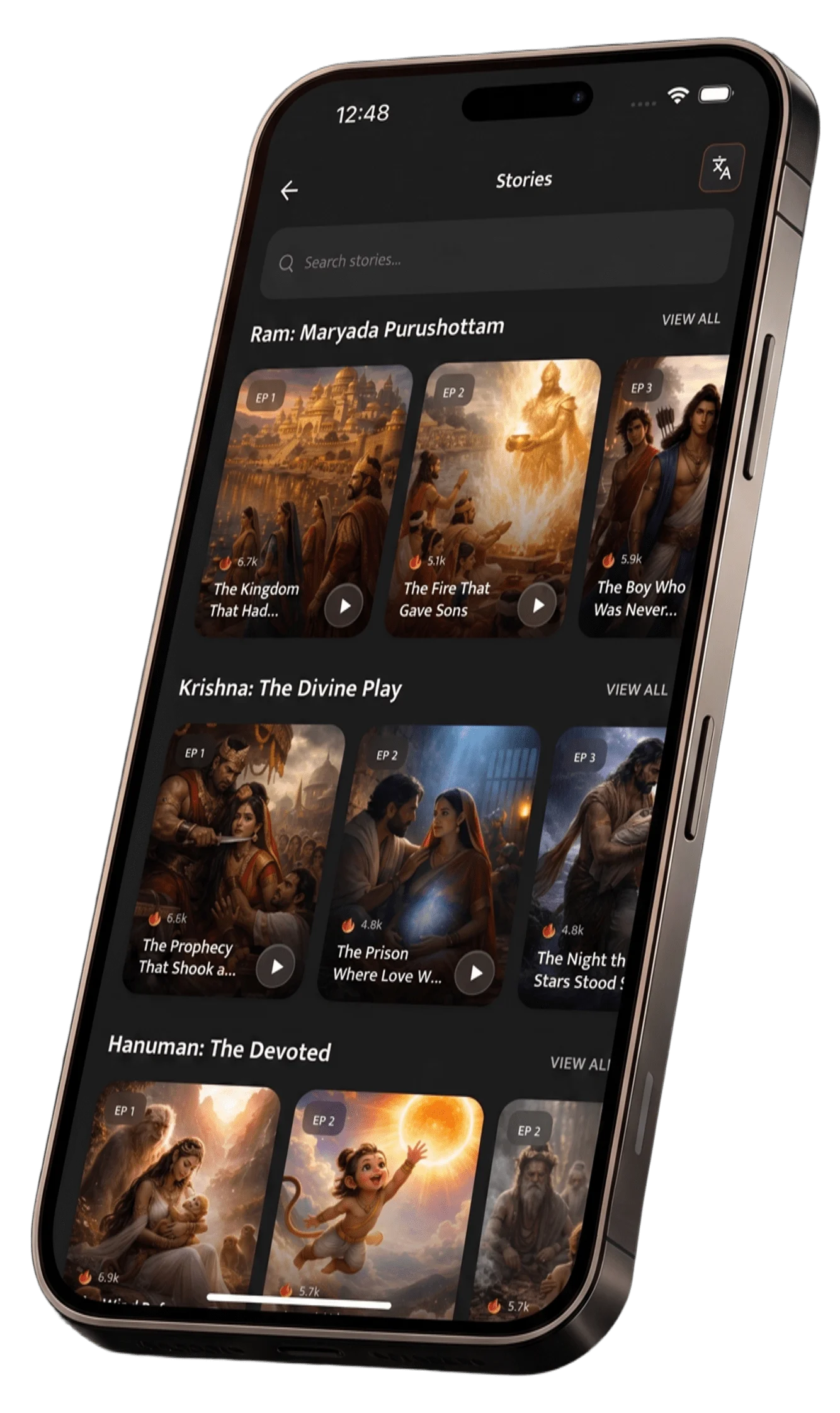
For those who want to move from mechanical recitation to genuine understanding, the Arutra app offers the Hanuman Chalisa with verse-by-verse translations and audio rendering.
Experience it on Arutra
Download the Arutra App
Guided Bhajan sessions, Bhagavad Gita verses, Saarthi AI, and more. Free on Android and iOS.