
Kabir Das was born around 1440, in or near Varanasi, to a family of Muslim weavers. He claimed as his guru the great Vaishnava saint Ramananda, whom he reportedly ambushed on the temple steps before dawn. When Ramananda said "Ram" in surprise, Kabir took this as his initiation. The story, whether historical or symbolic, captures something essential about Kabir: he reached across boundaries that others considered uncrossable.
The Doha Form
His dohas, two-line aphoristic verses in Braj Bhasha (a medieval form of Hindi), are the most accessible and widely known part of his literary output. They are found in the Guru Granth Sahib, the primary scripture of Sikhism, in various Rajasthani and north Indian anthologies, and in the collective memory of people who may not even know they are reciting Kabir. His verses have entered the oral tradition so deeply that many circulate as anonymous proverbs.
His Most Celebrated Verses
"Bura jo dekhan main chala, bura na milya koi, Jo dil khoja apna, mujhse bura na koi" (When I set out to search for the wicked, I found none. But when I searched my own heart, I found no one more wicked than me). This verse encapsulates Kabir's primary method: using the impulse toward external criticism as a mirror for self-examination.
"Dheere dheere re mana, dheere sab kuch hoye" (Slowly, slowly, O mind, everything happens in its own time). This is Kabir on the theme of impatience and surrender.
"Pothi padh padh jag mua, pandit bhayo na koye, Dhai akhar prem ke, padhe so pandit hoye" (Reading books, the world died, yet none became learned. He who reads just two and a half letters of love, he becomes the truly learned one). This is perhaps Kabir's most radical verse: the suggestion that the entire apparatus of religious learning is less transformative than genuine love.
His Relationship with Both Orthodoxies
His relationship with both Hindu and Muslim orthodoxies was equally uncomfortable. He rejected idol worship, temple ritual, and caste. He also rejected the mosque and the authority of the Quran as the sole path. Both communities claimed him after his death. The tradition holds that when his body was uncovered after death, instead of a corpse there were flowers, which Hindus and Muslims divided to perform their respective last rites with.
The Nirguna Tradition
His bhajans and dohas sit within the Nirguna tradition, devotion addressed to the formless, nameless divine rather than to a personal deity with attributes. This makes them accessible to people across religious backgrounds, which is surely part of why they endure.
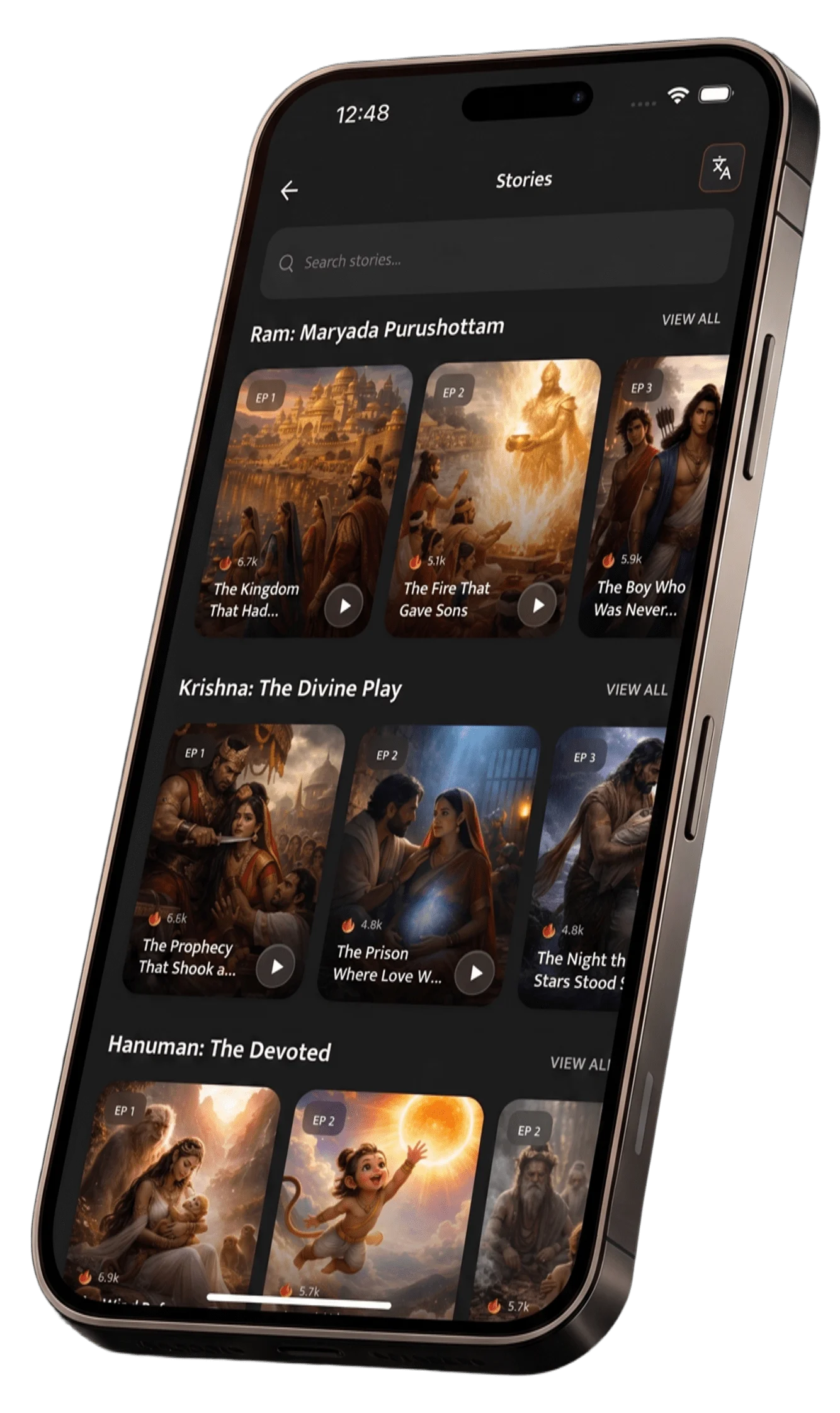
To explore Kabir's dohas with their full translations and philosophical context, the Arutra app offers a curated Kabir collection that brings these verses to life for the contemporary reader.
Experience it on Arutra
Download the Arutra App
Guided Bhajan sessions, Bhagavad Gita verses, Saarthi AI, and more. Free on Android and iOS.