
The word Dinacharya comes from dina (day) and charya (conduct, behavior, course of action). Together: the proper conduct of a day. In the Ayurvedic and yogic traditions, Dinacharya refers to the structured daily routine that keeps the body healthy, the mind clear, and the inner life alive.
The complete classical Dinacharya is extensive. It covers everything from the moment of waking to the moment of sleep. This guide focuses on the morning — the portion that sets the tone for everything else.
Why Mornings Matter: The Science and the Tradition
Both Ayurveda and modern chronobiology agree on a fundamental point: the early morning hours are qualitatively different from the rest of the day.
Ayurveda divides the 24-hour cycle by the three doshas. Brahma Muhurta — the "creator's hour" — falls approximately 90 minutes before sunrise (roughly 4:30–6:00 AM depending on the season and latitude). This is considered the most sattvic period of the day: vata (air/space) is dominant, the mind is clear and receptive before the day's stimulation begins, and the body's natural processes (cortisol rising, body temperature increasing) are preparing for activity.
Modern research has its own version of this observation: cortisol peaks in the first hour after waking, which is why the morning is both when the mind is most alert and when habits are most effectively installed. What you do in the morning shapes your physiological and psychological state for the hours that follow.
The Classical Sequence
Traditional Dinacharya from texts like the Ashtanga Hridayam includes these elements in order:
Brahma Muhurta Waking
Wake up during Brahma Muhurta — 90 minutes before sunrise. This is the most challenging element for modern practitioners and the one most worth working toward gradually. Even waking 30 minutes earlier than usual is a step in the right direction.
The first act on waking is to observe the state of mind before getting out of bed. How do you feel? What thoughts arrive first? This brief moment of observation before the day begins is a form of self-knowledge.
Prayer and Intention
The traditional morning begins with a prayer — acknowledging the source of life and setting an intention for the day. Many practitioners offer a brief prayer before their feet touch the floor.
A common verse chanted upon waking:
Karagre vasate Lakshmi, Karamadhye Saraswati, Karamule tu Govinda, Prabhate karadarshanam — "At the tip of the hand dwells Lakshmi [prosperity], in the middle Saraswati [knowledge], at the base Govinda [the divine]. In the early morning, behold your hands."
The hands, in this view, represent the capacities that will be offered in service today.
Mouth and Tongue Care (Dantadhavana, Jihwa Prakshalana)
Cleaning the teeth and scraping the tongue — the tongue scraper (jihwa nirlekhana) is one of Ayurveda's most distinctive tools. The coating that accumulates on the tongue overnight is considered ama (metabolic waste); removing it before drinking or eating prevents its reabsorption.
Water and Oil Pulling (Gandoosha)
Drinking a glass of room-temperature or warm water — not cold — first thing in the morning. The warm water activates digestion, flushes the system, and is associated with numerous benefits in both Ayurvedic and modern nutritional practice. Some traditions include oil pulling (swishing sesame or coconut oil for 10–20 minutes) before drinking.
Abhyanga (Oil Massage)
Self-massage with warm sesame oil (or coconut oil for pitta types). Applied before bathing, left for 5–15 minutes, then bathed off. Abhyanga is deeply nourishing to the nervous system, improves circulation, and is one of the most effective Ayurvedic practices for reducing vata imbalance (anxiety, restlessness, poor sleep). Even a brief 5-minute self-massage makes a noticeable difference.
Bathing (Snana)
The classical texts recommend a cool or lukewarm bath — cold for pitta, warm for vata and kapha. The purpose is not only physical cleanliness but the transition from the dream state to the waking state: the body is prepared for activity and for the sadhana that follows.
Sadhana
This is the heart of Dinacharya — the spiritual practice that the entire morning structure is designed to create space for. Classical sadhana includes some combination of:
- Asana (yoga postures) — preparing the body
- Pranayama (breath work) — preparing the prana
- Dhyana (meditation) — direct work with the mind
- Japa (mantra repetition) — Naam Jaap
- Swadhyaya (scripture study) — reading from the Bhagavad Gita, Upanishads, or other sacred texts
- Prayer and devotion
The specific combination varies by tradition and individual temperament. What matters is consistency: showing up for sadhana every morning, even for 20 minutes, is far more valuable than a two-hour session on rare occasions.
Sunrise Salutation
Traditionally, the rising sun is honored with Surya Namaskar (sun salutation) — 12 postures synchronized with breath — and/or the Gayatri Mantra, ideally chanted facing east as the sun rises.
A Light, Sattvic Breakfast
The first meal is taken after sadhana, not before. Traditional recommendations include warm, easily digestible foods — soft-cooked grains, warm milk, fruits. Cold or heavy foods early in the morning are considered taxing on the digestive fire (agni) that has just begun to awaken.
A Modern Dinacharya: Practical Adaptation
Few people can implement the full classical routine immediately. Here is a realistic progression:
Week 1-2: Foundation
- Wake up 15-30 minutes earlier than usual
- Drink a glass of warm water immediately
- Scrape tongue before brushing
- Do 10 minutes of any sadhana (even just sitting quietly and reading a few Gita verses)
Week 3-4: Expansion
- Move wakeup 15 more minutes earlier
- Add 5-minute self-massage before shower
- Extend sadhana to 20 minutes — add 5 minutes of Naam Jaap or pranayama
Month 2+: Deepening
- Gradually move toward Brahma Muhurta waking (this may take months or years)
- Extend sadhana to 30-45 minutes
- Add Surya Namaskar if not already included
The key insight: the exact elements matter less than the principle. You are creating a container — a protected period of time each morning before the demands of the day arrive — that is dedicated to your inner life. Even 15 minutes of that, done daily with sincerity, produces accumulating effects that sporadic long sessions cannot.
Dinacharya and the Gita
The Bhagavad Gita describes the person of wisdom as one who is "niyataswapnavabodhasya" — regular and measured in sleep and waking. Discipline over the daily routine is not a limitation of freedom in the Gita's view; it is the foundation of it.
"There is no possibility of one's becoming a yogi, O Arjuna, if one eats too much or eats too little, sleeps too much or does not sleep enough." (6:16)
The Gita is specific: neither extreme serves the inner life. Dinacharya is the practical implementation of this principle — finding the disciplined middle path in the daily structure of your life.
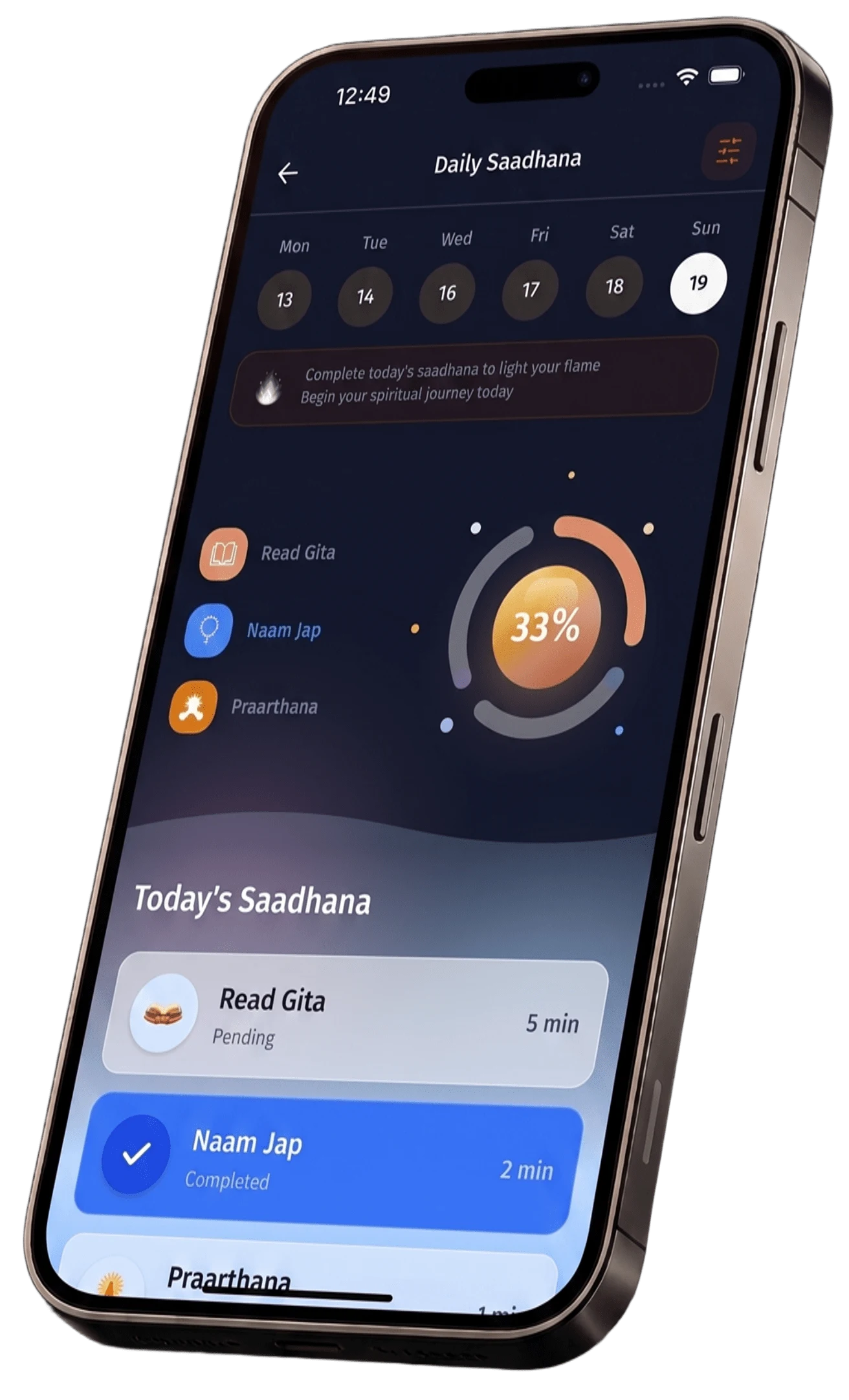
Arutra's Daily Sadhana tracker is designed to support exactly this kind of consistent morning practice. Log your Naam Jaap, Gita reading, and meditation each day. Watch your streak grow. The habit of showing up daily — whatever your Dinacharya looks like — is what transforms good intentions into a practice that actually changes you.
Experience it on Arutra
Download the Arutra App
Guided Meditation sessions, Bhagavad Gita verses, Saarthi AI, and more. Free on Android and iOS.