
Many people try meditation once or twice, find it difficult to sit still with a busy mind, and conclude that meditation is not for them. This is almost never true. What they have discovered is that the mind is busy, which is the very thing meditation works with. The difficulty is not a sign that you are doing it wrong. It is the starting point of the practice.
Choosing a Method
The first decision is choosing a method. For most beginners, one of two approaches works well. The first is following the breath: you sit, close your eyes, and keep your attention on the physical sensations of breathing, the rise and fall of the chest, the passage of air through the nostrils. Every time the mind wanders, you gently return to the breath. The second is mantra meditation: you choose a divine name or short mantra (Ram, Om, So Hum) and repeat it silently in rhythm with the breath. Both are valid entry points.
Posture and Setting
Sit in a way that allows your spine to be upright without being rigid. You do not need to sit in lotus pose. A chair works perfectly well. What matters is that your back is straight enough to support alertness and your body is relaxed enough to not be a distraction. The same dedicated spot, same time each day, same brief prayer or intention at the start: these small consistencies signal to the nervous system that this time is different from ordinary waking activity.
Starting Small
Begin with ten minutes. Not twenty, not thirty, ten. The goal at first is not depth. It is regularity. Ten minutes every day for a month does more than an hour once a week. Set a timer so you are not distracted by wondering when the session will end.
Working with Distraction
The mind will wander. This is not failure. The practice of meditation is not having a clear mind. It is the practice of noticing when the mind has wandered and returning without drama. Each return is a repetition, like a rep in physical training. Over weeks and months, the mind's tendency to wander becomes less frantic and the periods of quiet attention grow longer.
The Role of Pranayama
Before sitting for meditation, a few minutes of pranayama (breathwork) can significantly ease the transition. The simple practice of slowing the exhale to twice the length of the inhale activates the parasympathetic nervous system and brings the mind closer to the quality of stillness in which meditation naturally deepens.
When Progress Feels Invisible
Progress in meditation is often not visible during the session itself. The signs appear in the rest of life: slightly more patience, a small increase in the ability to pause before reacting, a subtle but noticeable shift in the quality of attention. These are the fruits of the practice, and they accumulate slowly but reliably.
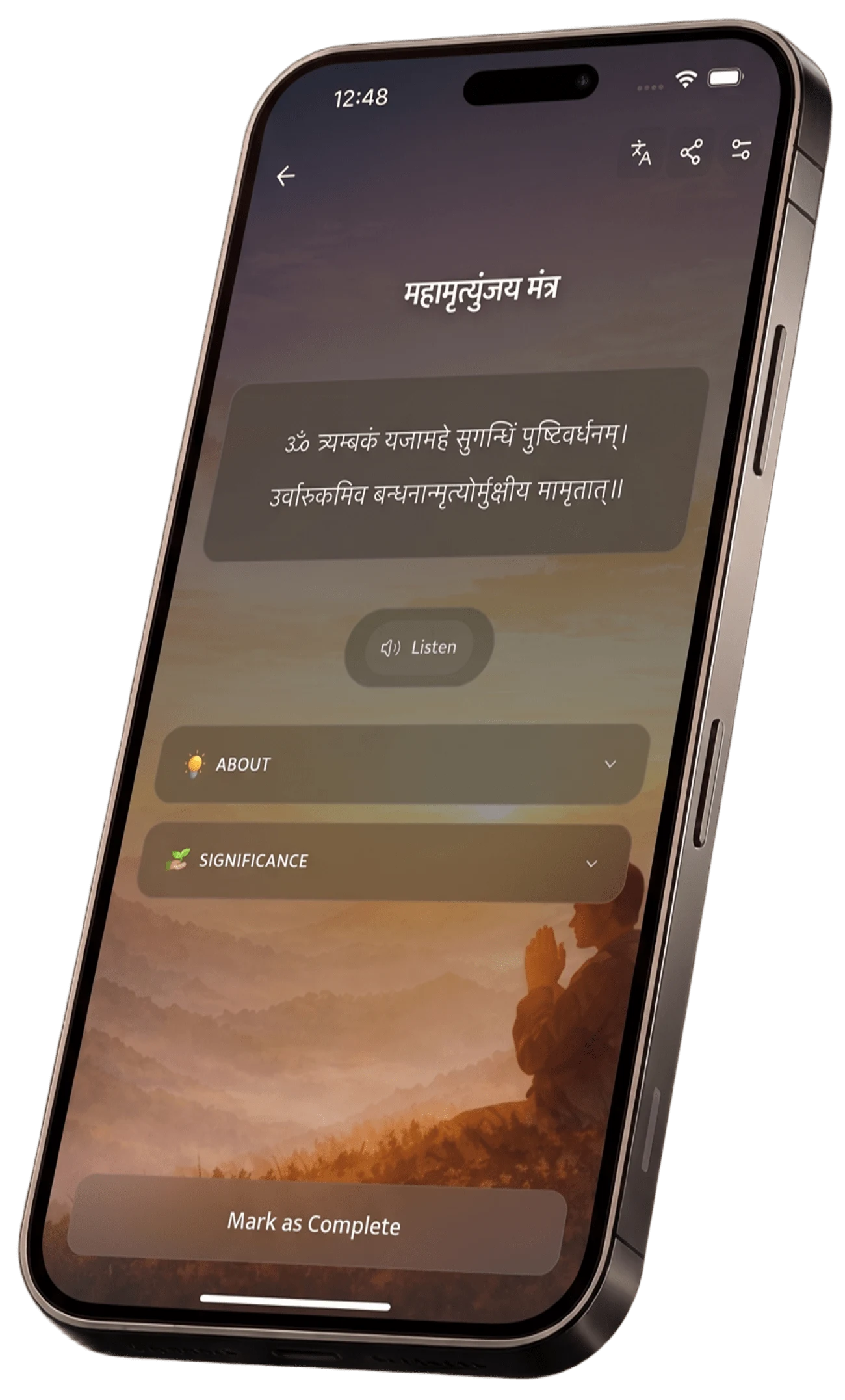
The Arutra app offers guided meditation sessions that walk you through each of these stages with gentle instruction, helping you build a practice that is both sustainable and genuinely nourishing.
Experience it on Arutra
Download the Arutra App
Guided Meditation sessions, Bhagavad Gita verses, Saarthi AI, and more. Free on Android and iOS.