One of the most common questions from new meditators is which type of meditation to choose. The question itself reflects something important: the tradition recognizes that different minds need different approaches. The one-size-fits-all approach to meditation is a modern simplification. The classical texts describe multiple forms of dhyana, each with its own entry point, its own characteristic flavor of practice, and its own particular relationship to liberation.
Mantra Dhyana
The most widely practiced form in the Hindu tradition is mantra dhyana, meditation using a sacred sound or divine name as the object of focus. The mantra serves as an anchor for attention. When the mind drifts, you return to the mantra. Over time, the repetition becomes subtler and subtler until the mantra dissolves into the awareness it points toward. This form is taught across virtually all lineages, from the Shaivite to the Vaishnavite to the Tantric traditions, because it works across a wide range of temperaments and requires no special intellectual preparation.
Trataka: Single-Point Gazing
Trataka is the practice of fixing the gaze, without blinking, on a single point. The most common object is a flame (ghee lamp or candle). The steady visual focus gradually draws the entire mind into a single point of attention, and the usual fragmentation of mental activity settles. Trataka is particularly recommended in the Hatha Yoga tradition as a preparation for deeper meditation, and it has the advantage of being more concrete and immediately engaging than purely internal practices for many beginners.
Atma Vichara: Self-Inquiry
Atma vichara, or self-inquiry, is the approach taught most prominently by Ramana Maharshi in the 20th century, though its roots go deep into the Advaita Vedanta tradition. The practice involves turning attention back toward the one who is aware, asking the question "Who is aware of these thoughts?" or "Who am I?" The question is not meant to generate an intellectual answer. It is meant to draw attention back to its own source. This approach suits people of a certain philosophical temperament, those who find themselves naturally drawn to the question of consciousness itself.
Devotional Meditation
Bhakti-based or devotional meditation uses the image, presence, or quality of a beloved deity as the object of meditation. You sit and bring to mind the form of your ishta devata, holding it in your inner awareness, allowing love and devotion to naturally deepen and sustain the attention. This form is particularly powerful for people whose natural orientation is devotional rather than analytical. The Bhakti saints described it as keeping the mind absorbed in the Lord the way a bee is absorbed in a flower.
Choosing What Matches Your Nature
How do you choose? The classical guidance is to look at your own temperament. If you are naturally analytical and philosophical, self-inquiry may suit you. If you are emotionally oriented toward devotion, bhakti meditation may deepen more easily. If you are practical and need a clear structure, mantra dhyana gives you a reliable, defined practice. If you are visually oriented, trataka may be a good entry point.
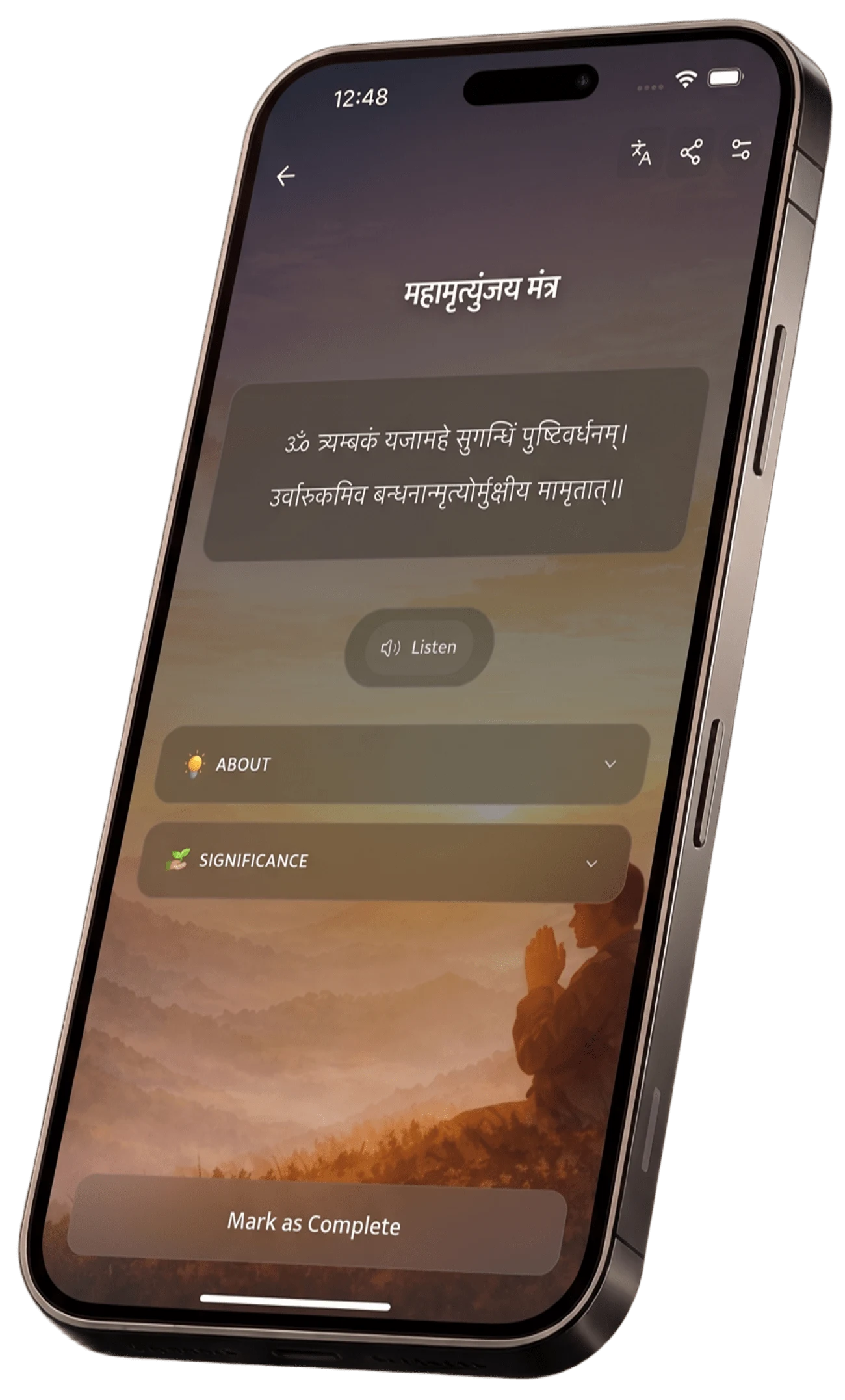
The Arutra app offers sessions in multiple meditation styles, allowing you to explore what resonates with your own nature and deepen the approach that suits you best.
Experience it on Arutra
Download the Arutra App
Guided Meditation sessions, Bhagavad Gita verses, Saarthi AI, and more. Free on Android and iOS.