
The word meditation is used today to describe everything from five minutes of calm breathing to deep states of absorption that ancient texts describe in technical detail. This ambiguity is partly responsible for the confusion many people feel when they try to meditate and wonder whether they are doing it right. Understanding what meditation actually means in the tradition from which it comes resolves much of this confusion.
Dhyana: The Sanskrit Source
The Sanskrit word dhyana, which is the source of the Chinese word Chan and the Japanese word Zen, is translated as meditation but carries a more precise meaning. In Patanjali's Yoga Sutras, dhyana is the seventh of eight limbs of yoga. It is distinguished from dharana (concentration) and samadhi (absorption). Dharana is the act of fixing attention on a single object. When that attention flows continuously and without interruption toward the object, it becomes dhyana. When even the sense of being the meditator dissolves and only the object of meditation remains, that is samadhi.
Not Relaxation, Not Mindfulness
This distinction matters because it reveals what meditation is aiming at. Relaxation is valuable, but it is not meditation in the classical sense. Mindfulness, in its contemporary usage, is closer to dharana, the cultivation of steady attention. Dhyana proper is what happens when that cultivation matures to the point where effort disappears and awareness rests naturally in its object without distraction.
The Rishis and Self-Knowledge
The ancient rishis valued meditation above nearly all other practices because they understood that the root of human suffering is avidya, ignorance of one's true nature. This ignorance is not intellectual. You cannot dispel it by reading books. It requires direct experience of the self as it actually is, not as the mind conceptualizes it. Meditation is the instrument for that direct experience.
What the Upanishads Say
The Upanishads describe the goal of meditation as the recognition of Atman, the individual self, as identical to Brahman, the universal consciousness. This is the mahavakya (great saying): Aham Brahmasmi (I am Brahman). The Upanishadic sages taught that this recognition is not an intellectual conclusion. It is an immediate, direct knowing that arises when the mind becomes sufficiently still and transparent.
Different Schools, One Direction
Different schools of Indian philosophy approach meditation differently. The Advaita Vedanta tradition emphasizes self-inquiry (atma vichara), the direct investigation of the question "Who am I?" The Bhakti tradition uses the object of devotion, a deity or divine quality, as the focus of meditation. The Yoga tradition uses pranayama and concentration techniques to systematically quiet the mind. But all of these point in the same direction: toward the quieting of mental activity so that what lies beneath it can be recognized.
Meditation in Daily Life
This does not mean that meditation is only for those pursuing liberation. Even practitioners who meditate primarily for wellbeing benefit from understanding what they are actually doing. The calm and clarity that meditation produces are not incidental side effects. They are what happens when the mind, even briefly, stops adding its constant commentary to experience and simply allows experience to be what it is.
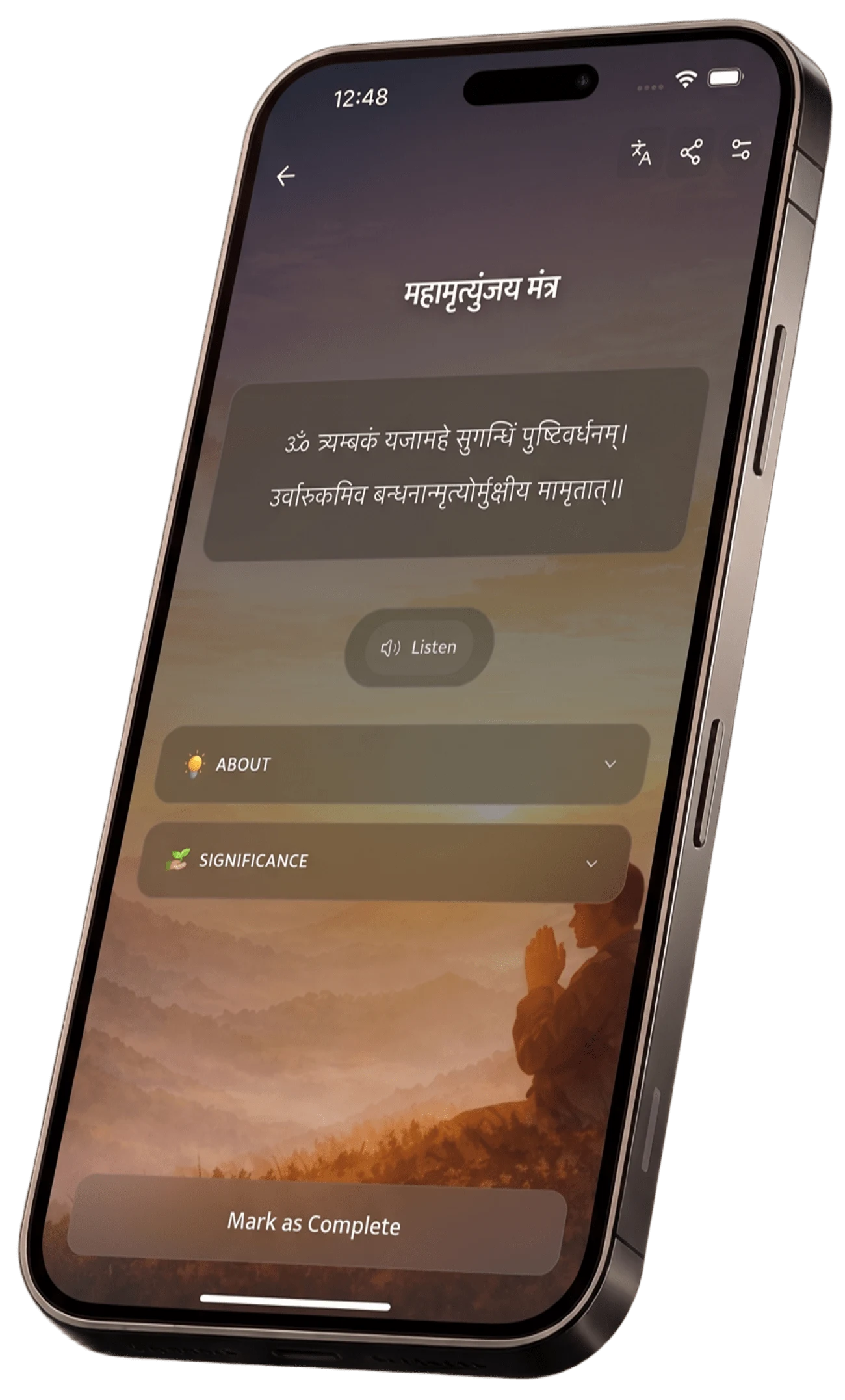
The Arutra app offers guided meditation sessions rooted in the dhyana tradition, helping you move from concentration practice toward the deeper stillness the tradition describes.
Experience it on Arutra
Download the Arutra App
Guided Meditation sessions, Bhagavad Gita verses, Saarthi AI, and more. Free on Android and iOS.