Of all the mantras in the Shaivite tradition, Om Namah Shivaya holds a place of special reverence. Known as the Panchakshara mantra, or five-syllable mantra (the five syllables being Na, Ma, Shi, Va, Ya, with Om as an additional prefix), it is considered the heart of the Shiva Purana and is recited by millions of devotees daily across India and beyond.
Five Syllables, Five Elements
Each of the five syllables corresponds to one of the five elements (Pancha Bhutas) that make up the manifest world. Na is associated with earth (Prithvi), Ma with water (Jala), Shi with fire (Agni), Va with air (Vayu), and Ya with space or ether (Akasha). When you chant this mantra, you are acknowledging that Shiva, as pure consciousness, pervades and underlies every element of existence.
The Deeper Meaning of Shiva
The word Shiva itself means "the auspicious one" or "in whom all things rest." In the non-dual Shaiva philosophy of Kashmir Shaivism, Shiva is not a deity sitting on a mountain but the fundamental nature of reality itself, pure, aware, and blissful. From this perspective, Om Namah Shivaya is not a prayer sent upward to someone separate from you. It is an acknowledgment of the true nature of what you already are.
Its Place in Scripture
The mantra appears in the Sri Rudram, one of the oldest hymns in the Vedic corpus, found in the Krishna Yajurveda. Its chanting is an ancient practice, and yet it remains strikingly alive in contemporary worship. Walk into any Shiva temple during morning puja, and you will hear it. It accompanies the abhishek, the lighting of lamps, and the offering of bilva leaves.
How to Chant It
For daily chanting, the recommended practice is to begin with the Om prefix and maintain a steady, unhurried pace. Each syllable should be clearly articulated, not blurred into the next. Many practitioners use a japa mala and complete one or more full rounds of 108 repetitions. The mantra can be chanted in the melodic style of bhajans, or it can be repeated quietly and inwardly during meditation.
Combining Meaning and Sound
Traditional texts suggest that the most powerful way to chant is with full attention on the meaning of each syllable while simultaneously feeling the resonance of the sound in the body. This combination of meaning-awareness and sound-awareness creates a depth that neither alone can achieve.
Who Can Chant This Mantra
New practitioners sometimes ask whether they need to be initiated into this mantra. The overwhelming consensus in the Shaivite tradition is that Om Namah Shivaya is openly available to anyone with sincere devotion. It does not require formal initiation, though the guidance of a teacher always adds depth.
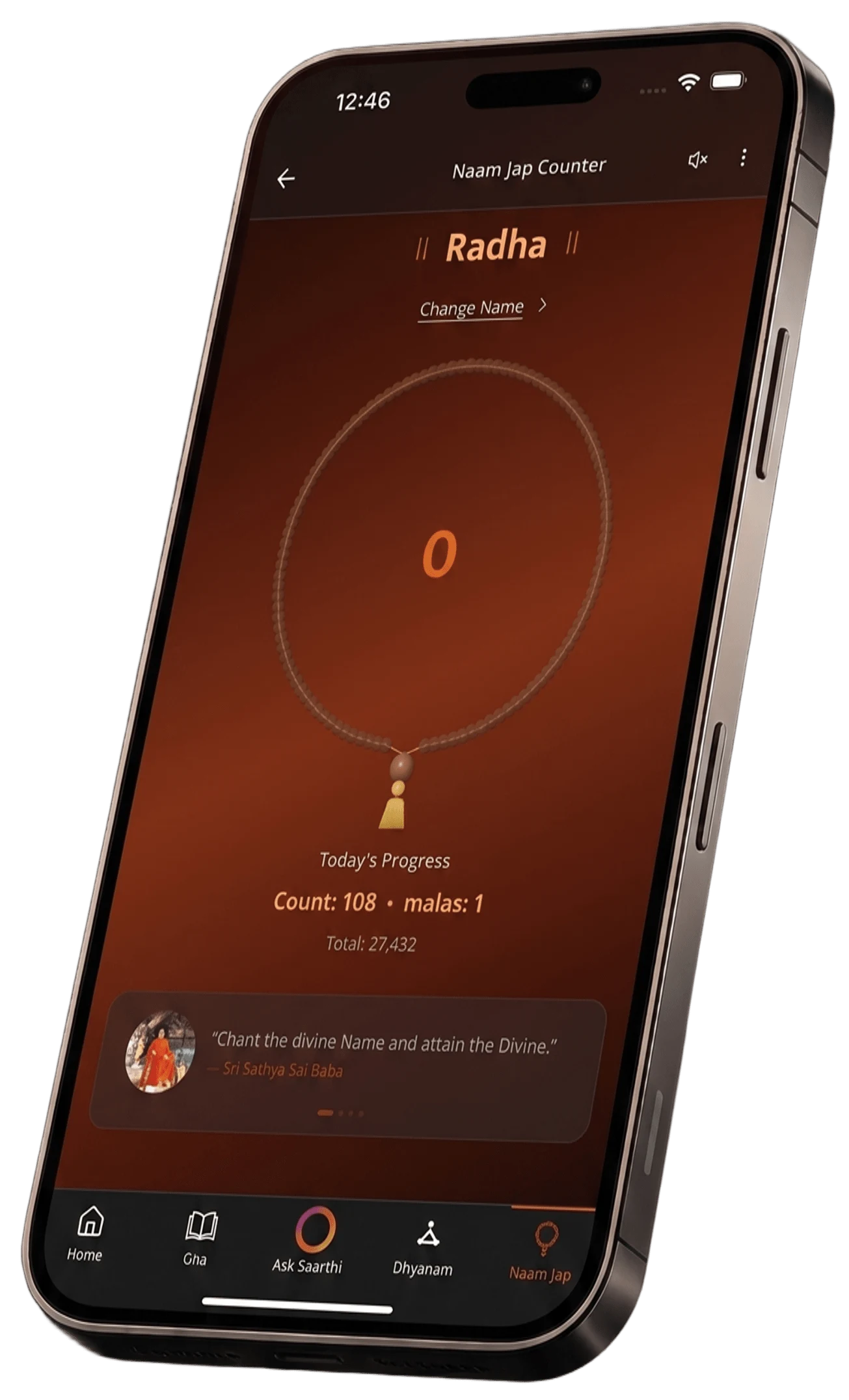
The Arutra app offers guided Om Namah Shivaya sessions along with background context, suggested counts, and optional ambient sounds to deepen your sitting.
Experience it on Arutra
Download the Arutra App
Guided Naam Jaap sessions, Bhagavad Gita verses, Saarthi AI, and more. Free on Android and iOS.
No download needed