
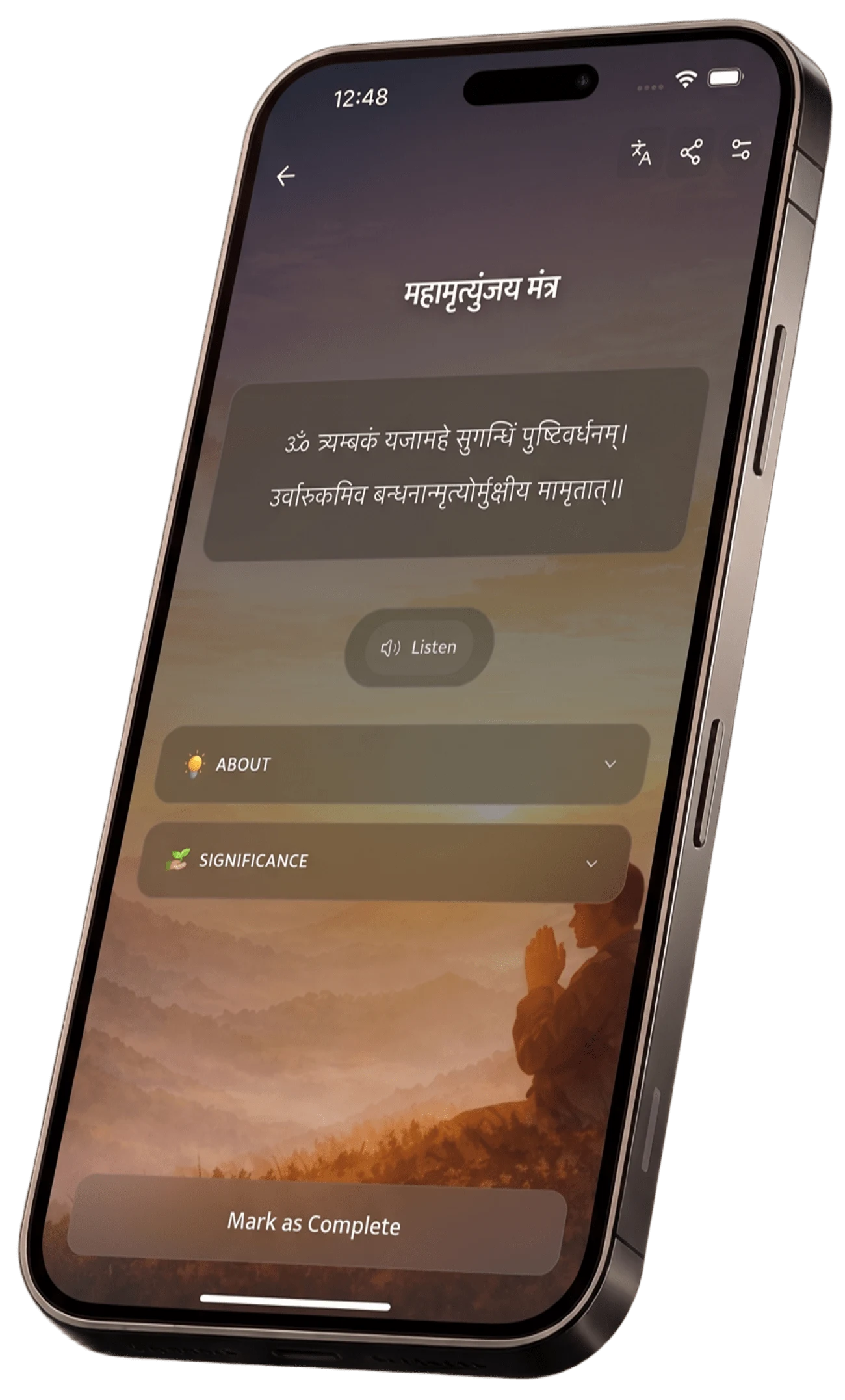
In Hindu tradition, the early morning hours — called Brahma Muhurta, roughly 90 minutes before sunrise — are considered the most auspicious time for prayer and spiritual practice. The mind is clear, the world is quiet, and the quality of attention available is unlike any other time of day.
You do not need to wake before sunrise to build a meaningful morning prayer practice. But establishing even a small intentional routine before the day's demands begin is one of the most consistently reported factors in sustained spiritual practice.
Here are the key Hindu morning prayers and how to incorporate them.
The Waking Mantra
The day traditionally begins before you even get out of bed. As you wake, the classical tradition recommends touching the ground with your right foot and reciting:
Samudra Vasane Devi, Parvata Stana Mandale
Vishnu Patni Namastubhyam, Pada Sparsham Kshamasva Me
"O Goddess who is clothed by the oceans, whose chest is the mountains, O consort of Vishnu, I offer my salutations to you. Please forgive the touch of my feet."
This prayer acknowledges the earth before you step on it — a small act that orients the entire day in a spirit of gratitude rather than taking for granted the ground beneath you.
The Hand-Viewing Prayer
Another traditional waking prayer involves looking at your palms before rising:
Karaagre Vasate Lakshmi, Kara Madhye Saraswati
Kara Moole Tu Govinda, Prabhate Kara Darshanam
"At the tips of the fingers dwells Lakshmi (prosperity), in the middle of the palm dwells Saraswati (knowledge), at the base of the hand dwells Govinda (God). In the morning, one should look at one's hands."
This prayer is brief — seconds — but it sets an intention: the work of these hands today is offered to something larger.
Gayatri Mantra at Sunrise
The Gayatri Mantra is traditionally chanted at three times: sunrise, noon, and sunset. The morning chanting at sunrise is considered the most important.
Om Bhur Bhuvah Swah
Tat Savitur Varenyam
Bhargo Devasya Dhimahi
Dhiyo Yo Nah Prachodayat
"We meditate on the divine light of the sun. May it illuminate our minds."
Traditionally, the Gayatri is chanted 108 times at sunrise. If this is not practical, even 11 or 27 repetitions with genuine attention is valuable. Arutra's Naam Jaap feature supports Gayatri Mantra counting with a tap-to-count system.
Morning Deity Prayers
After the waking mantras, many households begin with a brief prayer to their chosen deity (ishta devata). Common morning prayers include:
For Ganesha (removes obstacles, auspicious start):
Vakratunda Mahakaya, Suryakoti Samaprabha
Nirvighnam Kuru Me Deva, Sarva Karyeshu Sarvada
"O Lord with the curved trunk and large body, who has the brilliance of a crore suns — please make all my undertakings free of obstacles."
For Vishnu (for protection and clarity):
Shantakaram Bhujaga Shayanam, Padmanabham Suresham
Vishwadhaaram Gaganasadrisham, Megha Varnam Shubhangam
For Shiva (for strength and liberation):
Karpura Gauram Karunavataram, Samsara Saram Bhujagendra Haram
Sada Vasantam Hridayaravinde, Bhavam Bhavani Sahitam Namami
Arutra's Praarthana feature organizes these and hundreds of other morning prayers by deity and occasion, with full text, transliteration, and meaning — so you can find the right prayer for any morning without having to search.
A Simple Morning Routine
For those starting from zero, here is a practical structure that takes 10–15 minutes:
- Wake — Recite the waking mantra before getting up (30 seconds)
- View your hands — The Karagre prayer (30 seconds)
- Freshen up
- Light a diya or incense (optional but creates a physical ritual anchor)
- Deity prayer — 1–2 minutes of prayer to your chosen deity
- Naam Jaap — 108 repetitions of your mantra (~5–8 minutes)
- Gayatri Mantra — 11 or 27 repetitions (~2–3 minutes)
This entire structure fits into 15 minutes and covers the major traditional morning practices: gratitude (waking mantras), devotion (deity prayer), repetition (naam jaap), and illumination (Gayatri).
Using Arutra for Your Morning Practice
Arutra's Praarthana section has morning prayers organized and ready — you don't need to remember each text. The Naam Jaap feature tracks your daily count so you can see your consistency over time. Daily Sadhana ties these together into a single trackable routine.
The goal is not perfection. It is consistency. A 10-minute morning practice done daily for a year creates something that a single hour of intense prayer cannot. Start small. Come back tomorrow.
Experience it on Arutra
Download the Arutra App
Guided Praarthana sessions, Bhagavad Gita verses, Saarthi AI, and more. Free on Android and iOS.