
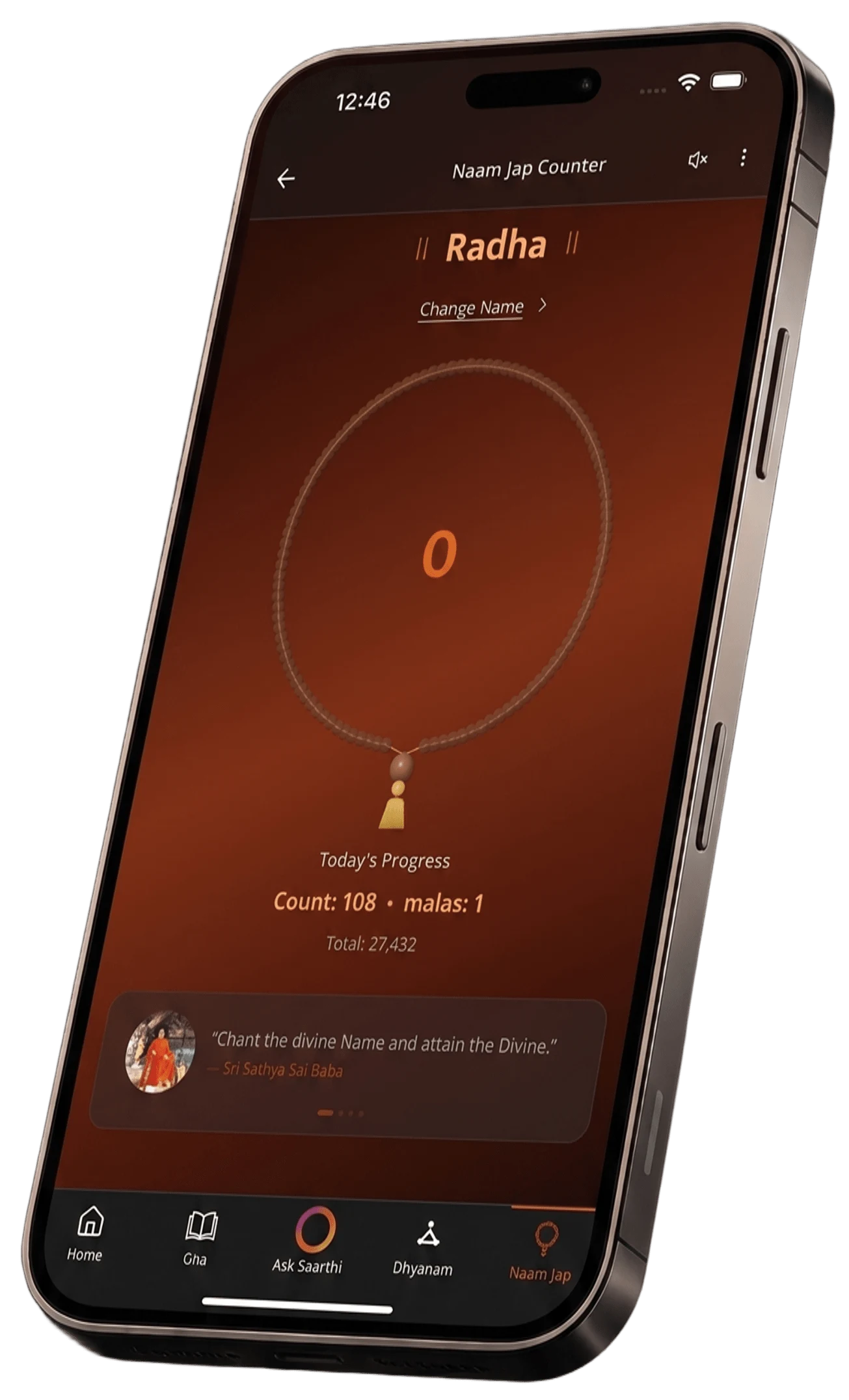
Naam Jaap, literally the repetition of a name, is one of the most widely practiced forms of spiritual discipline in India. Whether a grandmother turns her beads before dawn or a young professional quietly mouths a mantra on a crowded metro, the practice cuts across age, background, and geography. At its heart, Naam Jaap is simple: you choose a divine name or short mantra, and you repeat it with attention and sincerity.
The Roots in Shabda Brahman
The tradition finds its roots in the Vedic concept of Shabda Brahman, the idea that sound is not merely vibration but a fundamental aspect of consciousness. The ancient rishis observed that certain sounds, when repeated with focused awareness, have the power to shift the practitioner's inner state. This was not superstition. It was careful observation over centuries, refined and passed down through guru-shishya lineages.
What Neuroscience Has Found
Modern neuroscience has begun to catch up with what those sages knew intuitively. Research on meditation and mantra repetition consistently shows reduced activity in the brain's default mode network, the region responsible for rumination and anxious self-talk. When you anchor your attention to a mantra, you give the mind something steady to hold, and the chronic mental chatter begins to settle. Heart rate slows, cortisol levels drop, and the body enters a state that researchers call the relaxation response.
How It Works on the Subtle Body
Beyond the physiological, Naam Jaap works on what practitioners call the subtle body. Each divine name carries a particular resonance. The name Ram, for instance, is considered a taraka mantra, a name that carries one across the ocean of worldly existence. The name Om Namah Shivaya contains within it the five elements and their presiding principles. Repeating these names is understood to gradually purify the antahkaran, the inner instrument of mind and intellect, making it more transparent to the light of awareness.
Available Anywhere, Any Time
One of the most beautiful aspects of this practice is its accessibility. Unlike some advanced forms of meditation that require specific postures, quiet rooms, or months of training, Naam Jaap can be done anywhere. Walking to work, washing dishes, sitting in traffic: the name of the divine can accompany you through any moment of the day.
Three Classical Forms of Japa
The classical texts prescribe different forms of Naam Jaap. Vaikhari japa is spoken aloud, Upamshu japa is whispered so that only the practitioner can hear, and Manasika japa is purely mental. The Yoga scriptures suggest that mental japa carries the deepest potency, but teachers often recommend beginning with spoken or whispered repetition because the auditory feedback helps sustain attention.
When the Mantra Becomes Natural
Over time, regular practitioners report that the mantra begins to arise spontaneously within them, even without conscious effort. This is called ajapa japa, the japa that happens without being deliberately initiated. At that stage, the practice has moved from something you do to something you are.
If you are looking for a structured way to begin or deepen a Naam Jaap practice, the Arutra app offers guided sessions with session timers, mala counters, and curated mantra guidance to support you wherever you are in your journey.
Experience it on Arutra
Download the Arutra App
Guided Naam Jaap sessions, Bhagavad Gita verses, Saarthi AI, and more. Free on Android and iOS.
No download needed