Hare Krishna, Hare Krishna, Krishna Krishna, Hare Hare, Hare Rama, Hare Rama, Rama Rama, Hare Hare. These thirty-two syllables, arranged in sixteen names, constitute what the Vaishnava tradition calls the Maha Mantra. The Kali-Santarana Upanishad states that these sixteen names are specifically suited to the Kali Yuga as a means of liberation available to every person regardless of birth, gender, or prior qualification.
What the Words Mean
The word Hare refers to the divine energy of the Lord, specifically understood in the Vaishnava tradition as Hara, another name for Radha, who represents the Lord's own inner bliss-energy. Krishna means the one who is all-attractive, drawing all souls back toward the source of all beauty and love. Rama refers both to Lord Rama of the Ramayana and to the divine reservoir of pleasure. When you chant this mantra, you are calling out to the Lord and to his energy simultaneously.
Chaitanya Mahaprabhu and Nama Sankirtana
Chaitanya Mahaprabhu, the 16th-century Bengali saint, popularized the public congregational chanting of this mantra across India in a way that was genuinely revolutionary. He taught that in the Kali Yuga, the most effective spiritual practice is nama sankirtana, the loud, communal singing and chanting of divine names. He demonstrated this himself by leading ecstatic processions through the streets of Navadvip and Puri, open to anyone who wished to join.
The Daily Practice
The mantra is traditionally chanted on a japa mala of 108 beads, and committed practitioners in the Vaishnava tradition complete sixteen rounds per day, which amounts to 1,728 repetitions. This commitment is described by teachers not as a burden but as a lifeline, a way of filling the day's hours with something that accumulates genuine spiritual substance.
What Practitioners Report
The effects of regular Hare Krishna chanting are described in both experiential and textual terms. Practitioners commonly report a gradual softening of the ego's defensive postures, a growing sense of warmth and gratitude, and moments of unexpected joy. The texts describe this as the mantra clearing accumulated impressions from the mind, the way rain washes dust from a mirror, allowing the inherent luminosity of the self to become more visible.
How to Begin
For a first-time practitioner, the advice is to begin with just one round per day and to chant at a pace where every name is clearly heard. The tradition is explicit that this mantra does not need to be chanted perfectly. What matters is that it is chanted with some degree of genuine calling, some authentic wish to connect with the divine.
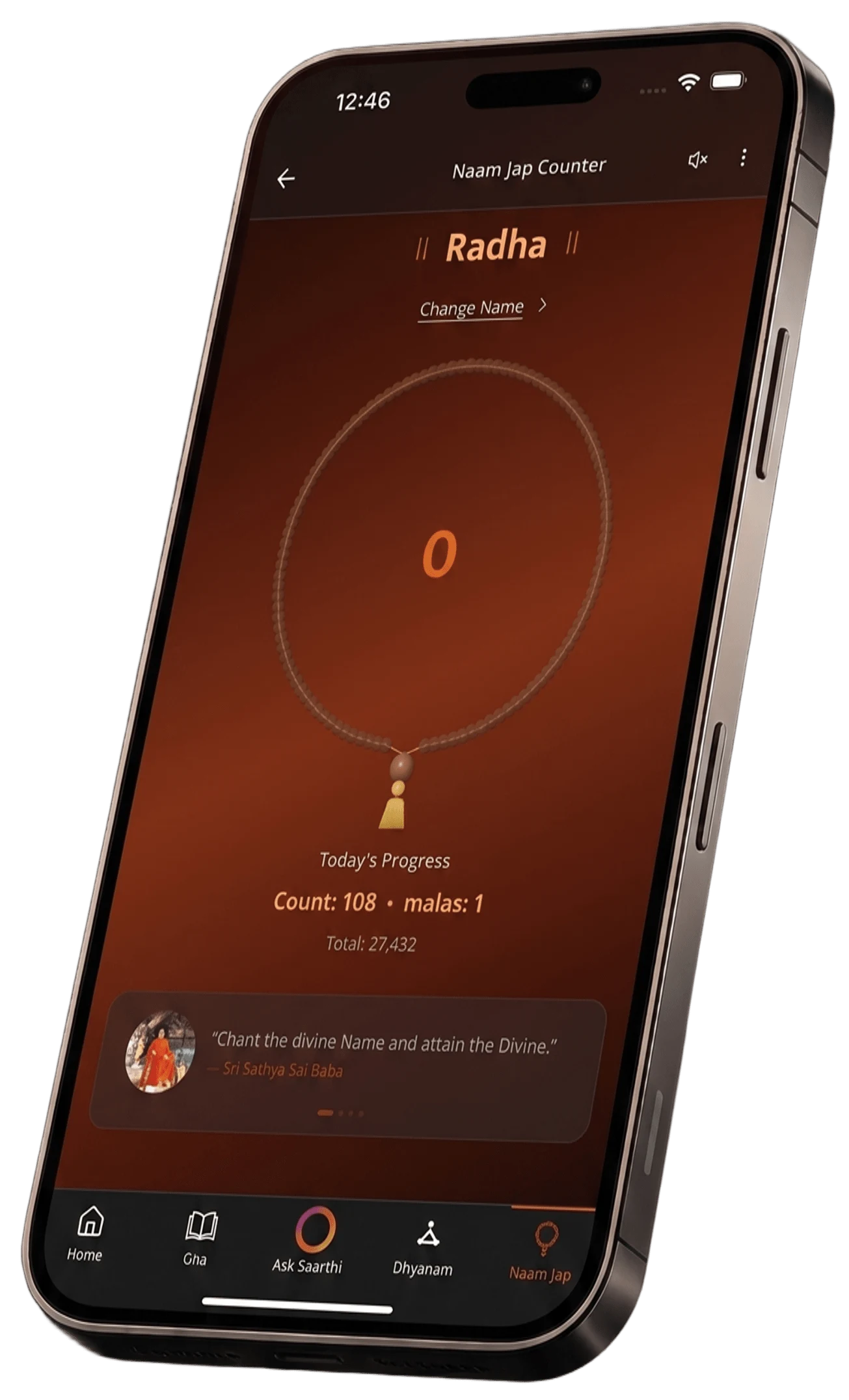
The Arutra app makes it easy to track your Hare Krishna japa practice with round counters, session logs, and gentle reminders that help you maintain consistency without pressure.
Experience it on Arutra
Download the Arutra App
Guided Naam Jaap sessions, Bhagavad Gita verses, Saarthi AI, and more. Free on Android and iOS.
No download needed