
The question of why prayer works is worth taking seriously, both from within the tradition and from the standpoint of what contemporary research reveals. These two perspectives do not contradict each other. They illuminate the same phenomenon from different angles.
The Hindu Understanding of Prayer
From the perspective of the Hindu tradition, prayer works because the divine is not remote. The concept of Antaryamin, the inner dweller, suggests that the divine is not a force outside the universe that needs to be petitioned from a distance. It is the very ground of consciousness, the awareness in which your own experience arises. When you pray, you are turning your attention toward what is already and always present within you. The prayer is effective to the degree that it is genuine.
Bhavana and the Quality of Feeling
The concept of bhavana, often translated as feeling or emotion, is central here. The Bhakti tradition is explicit that the feeling quality of a prayer matters more than its technical correctness. A prayer offered with authentic longing, genuine gratitude, or sincere surrender reaches further than a perfectly pronounced shloka recited without any inner participation. Precision and correct recitation are means rather than ends.
How Psychology Explains It
From a psychological perspective, prayer functions through several well-documented mechanisms. First, it redirects attention. When you pause and intentionally direct your attention toward something larger than your immediate concerns, the brain's default mode network, responsible for self-referential rumination, becomes less dominant. This is measurably similar to what happens in meditation.
Self-Transcendence and Resilience
Second, prayer cultivates what researchers call self-transcendence, the capacity to hold your individual concerns within a larger frame of meaning. People who regularly practice self-transcendent behaviors, including prayer, tend to be more resilient in the face of adversity, not because they are in denial about difficulty but because they have a habitual way of situating that difficulty within something larger.
The Evidence on Gratitude
Third, gratitude, which is a central feature of most prayer traditions, has one of the strongest evidence bases of any positive psychological intervention. People who regularly practice gratitude consistently report higher life satisfaction, better sleep, and stronger relationships.
Prayer as Mental Training
The combination of these effects is not trivial. Regular praarthana practice is not a passive activity. It is a form of mental and emotional training that, over time, genuinely changes the practitioner's orientation toward life.
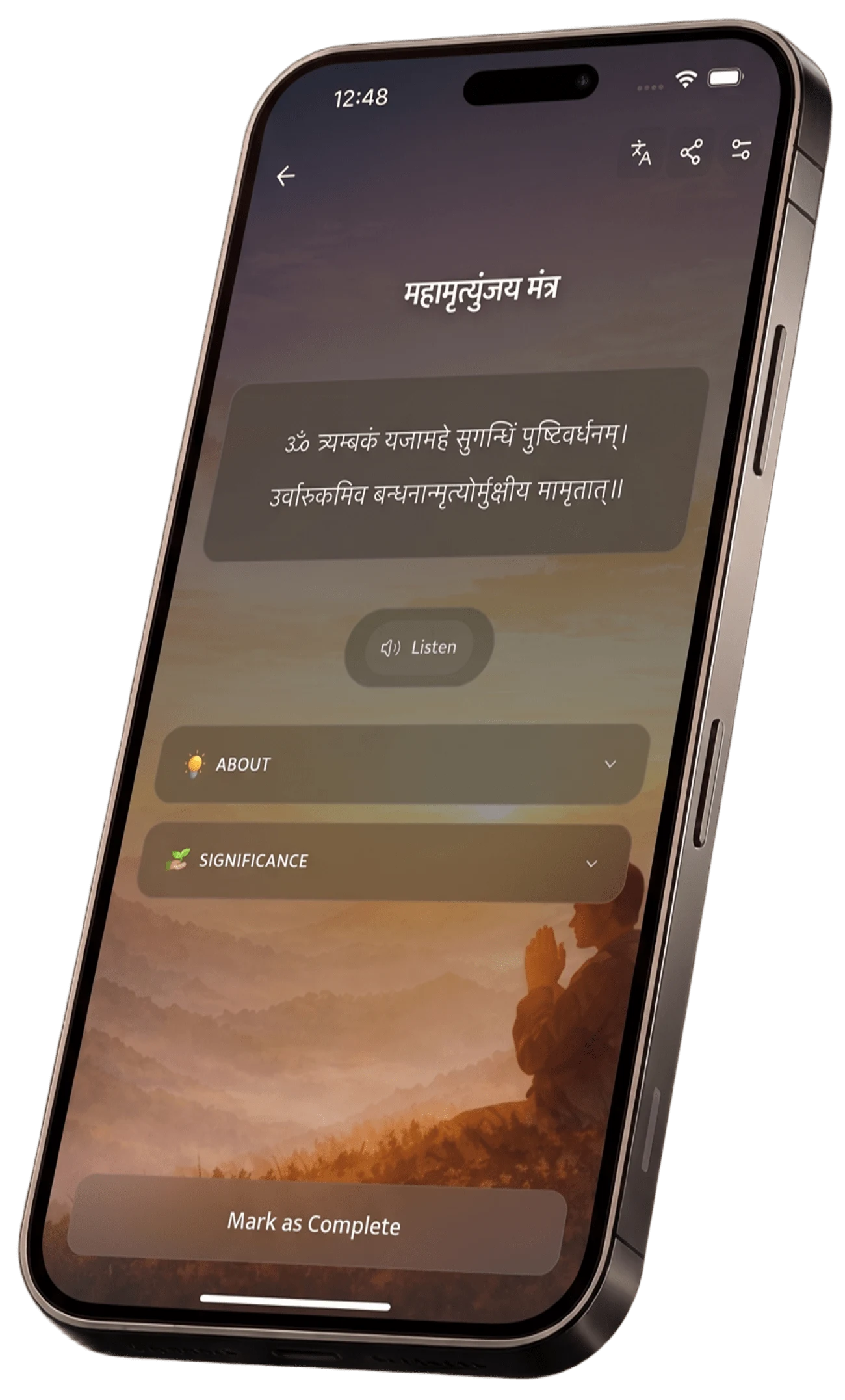
The Arutra app offers structured praarthana routines that combine scriptural prayer, guided reflection, and gratitude practices, making it easy to maintain a consistent practice even within a busy daily schedule.
Experience it on Arutra
Download the Arutra App
Guided Praarthana sessions, Bhagavad Gita verses, Saarthi AI, and more. Free on Android and iOS.